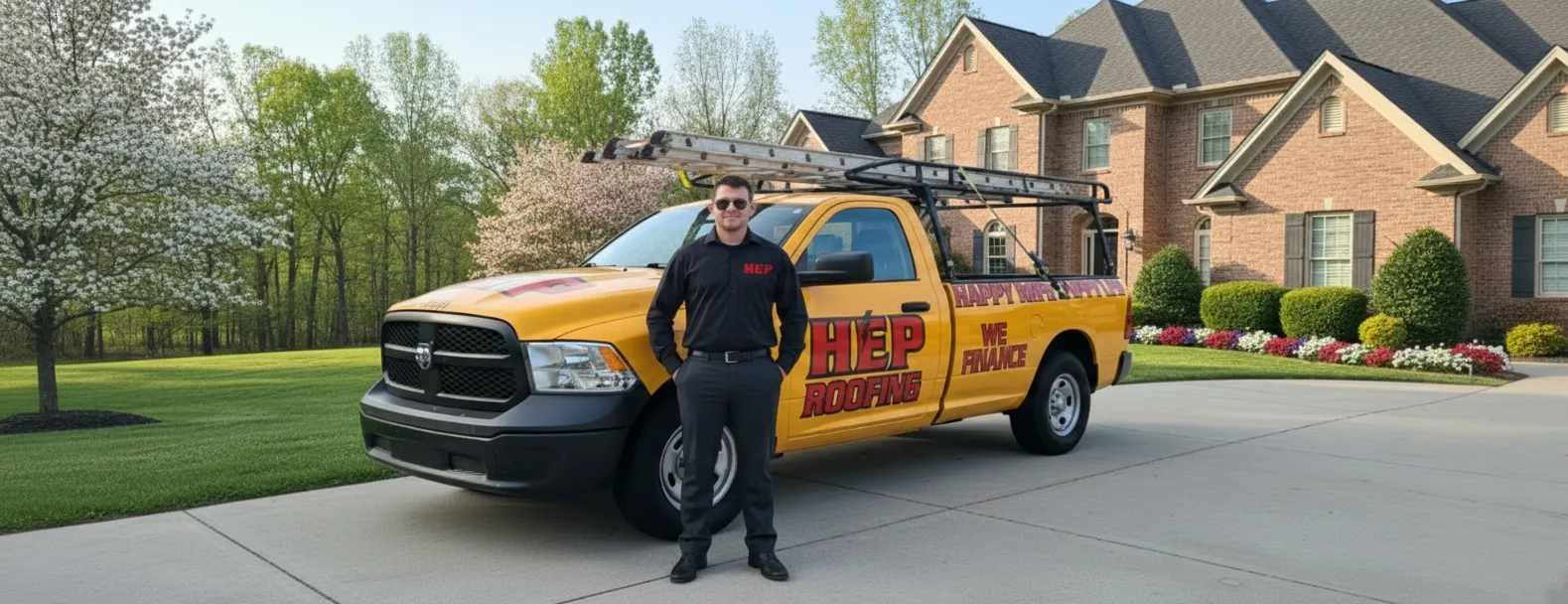

Storm Damage Restoration
Your trusted partner for professional home services. Quality workmanship, guaranteed satisfaction.

Storm Damage Restoration | Roofing | Elizabethton
When fierce Appalachian winds, hail, or driving rain batter Elizabethton, you need more than a patch—you need a neighbor who understands how quickly a small leak can turn into major damage. HEP’s Roofing & Storm Damage Restoration team is on-call 24/7, arriving with certified inspectors, tarps, and the know-how to stabilize your home the very same day. From shingle-splitting gusts off the Watauga River to tree limbs driven by mountain squalls, we’ve seen—and repaired—it all, using Owens Corning and GAF materials engineered to withstand Tennessee’s toughest weather.
Once the roof is secure, we handle everything else: detailed photo documentation for insurance claims, transparent estimates, and craftsmanship backed by industry-leading warranties. Our crews are local, respectful, and clean up so thoroughly you’ll hardly know we were there—except for the watertight roof overhead. When storms strike Elizabethton, call the professionals trusted by your friends and neighbors; with HEP, Help Is On The Way!
What Our Customers Say


Understanding Storm Damage on Elizabethton Roofs
Storm systems that sweep through Carter County leave distinct signatures on residential roofs. Knowing what each weather element can do allows homeowners to appreciate why professional restoration is essential and why HEP’s local expertise matters.
Wind Damage
High winds common in the Appalachian foothills generate uplift pressure along roof edges, ridges, and eaves. When shingles are exposed to this force, sealant strips can break, causing
- lifted shingle tabs
- creased or torn laminate layers
- displaced flashing around chimneys and valleys
Even a single missing shingle exposes underlayment to UV radiation and moisture, which accelerates deterioration.
Hail Damage
Hailstones vary from pea-size pellets to golf-ball impacts. Repeated hits fracture the protective granule layer on asphalt shingles. Key indicators include:
- dark, circular bruises where granules are knocked away
- punctures in soft metal components such as ridge vents or gutters
- micro-cracks that lead to premature leaks during next rainfall
Because hail bruises are often invisible from ground level, HEP’s close-range inspection is crucial.
Rain & Flash Flood Influence
Torrential rain combined with flash flooding saturates decking boards if previous wind or hail damage has created entry points. Roof slopes that direct water toward valleys experience:
- overwhelmed underlayment seams
- rapid shingle edge wicking
- potential interior ceiling staining within hours
Timely drying and replacement prevent mold colonies from taking hold in attic insulation.
Why Prompt Storm Damage Restoration Matters
Waiting to address storm damage can transform a minor repair into a complete reroof. Three primary consequences illustrate the urgency.
Prevent Secondary Interior Deterioration
Water infiltrating through compromised shingles migrates along rafters, causing:
- swollen gypsum board
- peeling paint
- warped hardwood flooring
Repairing interior finishes always costs more than stopping the leak at its source.
Preserve Structural Integrity
Prolonged moisture weakens sheathing and truss plates. Rotten decking loses load-bearing capacity, jeopardizing:
- safe snow load management
- appropriate wind uplift resistance
- attachment points for future reroof layers
Maintain Energy Efficiency
A damp insulation layer loses R-value. Heated and cooled air escapes more easily, forcing HVAC systems to run longer cycles. Immediate roof restoration from HEP reestablishes a continuous thermal envelope.
HEP’s Comprehensive Roofing Storm Damage Restoration Service in Elizabethton
As a local roofing contractor, HEP has refined a start-to-finish workflow tailored to East Tennessee weather patterns and building codes.
In-Depth Inspection Protocol
Trained technicians begin with an exterior walk-around, progress to roof surface evaluation, and finish with attic diagnostics. Tools utilized:
- high-resolution drones for steep slopes
- moisture meters to detect hidden saturation
- infrared cameras to identify thermal anomalies
Findings are documented with time-stamped photographs that assist both homeowners and insurance representatives.
Customized Restoration Plan & Material Selection
Every roof in Elizabethton has unique pitch angles, accessory penetrations, and aesthetic requirements. HEP’s project manager reviews inspection results and recommends:
- matching or upgraded shingle profiles
- underlayment types suited for ice-dam protection near the ridge line
- color palettes that enhance curb appeal while reflecting solar heat
Skilled Craftsmanship & Local Code Compliance
Carter County building officials mandate specific nail counts, starter strip placements, and ventilation ratios. HEP’s crew follows:
- six-nail patterns on high-wind slopes
- factory-approved ridge cap systems
- proper ice & water shield extensions beyond interior wall planes
Attention to code compliance ensures permits close without delays and warranties remain valid.
Post-Restoration Quality Assurance
After installation, supervisors conduct a multi-point inspection verifying:
- shingle alignment accuracy
- uniform fastener depth
- secure flashing integrity around skylights and plumbing boots
Written confirmation and photographic evidence provide peace of mind for homeowners.
Materials and Techniques That Stand Up to Tennessee Storms
Architectural Asphalt Shingles
Architectural (also called dimensional) shingles provide double-layer construction, offering:
- superior wind ratings up to 130 mph when installed to manufacturer specs
- enhanced shadow lines for upscale appearance
- thicker nailing zones that resist pull-through in gusty conditions
Metal Roofing Upgrades
For homeowners seeking longevity, HEP installs interlocking standing-seam panels featuring:
- concealed fasteners that reduce leak risk
- Class A fire resistance
- reflective pigment options lowering attic temperatures
Impact-Resistant Underlayment Systems
Synthetic underlayments outperform traditional felt in tear strength and water shedding. HEP recommends high-temperature variants for:
- added traction during installation in humid summers
- resistance to overflow if shingles lift temporarily in storms
Ventilation & Waterproofing Enhancements
Balanced attic airflow extends shingle life. HEP integrates:
- ridge vents combined with soffit intakes
- self-sealing pipe boots that expand and contract with temperature swings
Waterproof membranes in valleys and around eave edges create secondary dams against wind-driven rain.
Navigating Insurance Claims With HEP’s Guidance
Storm damage restoration frequently involves an insurance component. HEP simplifies the process.
Detailed Documentation
Inspectors prepare:
- measurement diagrams
- close-up imagery indicating hail bruises and wind creases
- written scope of damage correlated with date-stamped weather events
Insurance Adjuster Collaboration
HEP meets adjusters on site to:
- point out less obvious damage such as soft decking spots
- provide shingle manufacturer specs confirming irreparable harm
- answer technical questions about repair methodologies
Transparency During Claim Resolution
Homeowners receive copies of all communication logs and progress reports. This openness eliminates surprises and builds trust while ensuring code-required upgrades are included in settlements.
The Role of Preventive Maintenance for Elizabethton Homeowners
Even the best restoration benefits from routine upkeep.
Seasonal Roof Checkpoints
HEP recommends inspections:
- each spring after freeze-thaw cycles
- each autumn before leaf accumulation
Gutter & Downspout Care
Clear drainage protects fascia and soffits. Key tasks:
- removal of compacted leaves
- verification of downspout extensions directing water away from foundations
Tree Limb Management
Strategically trimming branches reduces branch impact during wind events and minimizes leaf buildup that can dam water on roof surfaces.
Signs That Your Roof Needs Immediate Attention After a Storm
Visible Granule Loss
Shingles showing shiny fiberglass mats or piling granules at downspout outlets indicate advanced wear.
Sagging or Depressed Roof Planes
Uneven decking can signal hidden saturation and impending structural compromise.
Water Stains on Ceilings or Walls
Yellow or brown circles expanding after heavy rain suggest active leaks.
Loose or Missing Flashing
Exposed nail heads or detached step flashing around sidewalls allow capillary action to draw water indoors.
Environmental Factors Unique to Elizabethton
High Wind Zones Around the Doe River
Valley channels funnel gusts exceeding design wind speeds for many older roofs. HEP reinforces edges with starter strip adhesives and extra fasteners.
Freeze-Thaw Cycles in Appalachian Foothills
Nighttime winter temperatures regularly dip below freezing after daytime snowmelt. Water seeps under shingle edges, refreezes, and lifts shingle layers. Ice & water shield membranes installed by HEP guard against this cycle.
Elevated Humidity and Moss Growth
Persistent dampness encourages moss that wedges under shingles, prying them upward. Zinc or copper strip installations along the ridge inhibit biological growth.
Common Misconceptions About Storm Damage Restoration
“My Roof Looks Fine From The Ground”
Some forms of damage, such as hail bruises or microscopic fractures, are invisible without close inspection. Assuming safety based on ground observation can lead to overlooked leaks.
“New Roofs Don’t Need Inspection”
Warranty validity often requires periodic inspections. Small defects from installation or early storms can void coverage if left unaddressed.
“Insurance Covers Everything Automatically”
Policy language differs on depreciation, code upgrades, and deductible requirements. Professional documentation is needed to secure full benefits.
How HEP Protects Homeowners During the Restoration Process
Safety Protocols for Occupied Homes
HEP erects temporary safety lines and enforces helmet usage, ensuring:
- zero ladder accidents
- minimal disruption to household routines
Debris Containment & Site Cleanliness
Magnetic rollers collect stray nails; tarps cover landscaping beds to prevent shingle scrap penetration.
Communication & Work Schedule Transparency
Daily progress updates include:
- start and stop times
- anticipated noise levels
- delivery schedules for materials
This clarity empowers homeowners to plan their day without surprises.
Long-Term Value Delivered by HEP’s Storm Damage Restoration
Warranty Support
Manufacturer warranties coupled with HEP’s craftsmanship guarantee protect roofs for decades when maintenance recommendations are followed.
Boosted Property Value
A restored roof certified to withstand regional storm loads increases buyer confidence and often raises appraisal figures.
Reduced Future Repair Costs
Comprehensive restoration coupled with preventive maintenance lowers lifetime ownership costs by avoiding emergency leak repairs and interior remediation.
Sustainable Practices in Modern Roof Restoration
Recycling Tear-Off Materials
Old asphalt shingles are processed into roadbed aggregate, diverting tons of waste from Carter County landfills.
Energy-Efficient Shingle Options
Solar-reflective granules reduce roof surface temperatures and lighten HVAC loads during humid summers.
Cool Roof Coatings For Solar Reflectance
On low-slope sections such as porches, HEP applies elastomeric coatings that:
- reflect infrared radiation
- self-heal minor cracks
- extend service life of underlying membranes
By integrating eco-friendly solutions with storm-resilient design, HEP supports both household savings and regional environmental goals.
Detailed Timeline of a Typical HEP Restoration Project
Day 1: Emergency Tarping and Site Stabilization
Immediately after a severe storm, HEP dispatches a response crew to install reinforced tarps over compromised areas. This measure halts active leaks, allowing:
- interior belongings to remain dry
- attic insulation to avoid further saturation
- structural elements to stabilize before repairs begin
Day 2–3: Material Logistics and Permit Acquisition
Project managers finalize measurements and place orders with regional suppliers. Tasks completed during this window include:
- submitting permit applications to the Elizabethton Building Codes Department
- scheduling dumpster delivery for debris containment
- arranging material staging zones that do not obstruct homeowner access
Day 4–5: Roof Tear-Off and Deck Inspection
HEP crews remove damaged shingles, underlayment, and flashings. Exposed decking is then inspected for rot or delamination. Any compromised sheets are:
- photographed for insurance documentation
- replaced with code-approved OSB or plywood of equal thickness
Day 6–7: Installation of New Roofing System
With a clean substrate, the team installs:
- ice & water shield along eaves and valleys
- synthetic underlayment across the field
- starter strips, shingles, and ridge ventilation in alignment with manufacturer specs
Final Day: Cleanup, Magnetic Sweep, and Final Walk-Through
Landscaping tarps are removed, revealing clean flower beds and lawns. Crews perform a magnetic sweep twice, eliminating hidden nails. A walkthrough with the homeowner confirms satisfaction with:
- aesthetic alignment of shingles
- operation of attic ventilation components
- absence of debris or damage to exterior fixtures
Roof Decking Considerations
OSB vs. Plywood in Moist Environments
While both oriented strand board (OSB) and plywood meet structural codes, their performance differs under prolonged moisture exposure:
- OSB can swell around fasteners if left wet, leading to uneven shingle surfaces.
- Plyboard’s cross-laminated plies offer slightly better water resistance, but delamination may occur in standing water scenarios.
HEP evaluates each case individually, replacing only sections where moisture content exceeds 20% to preserve integrity and manage project costs responsibly.
Importance of Proper Attic Insulation Post-Restoration
Moisture Management and Energy Savings
After a storm, insulation often becomes damp, jeopardizing R-value and promoting mold. HEP recommends:
- removing and replacing saturated batt or blown-in insulation
- installing vapor barriers where absent
- verifying that baffles keep soffit vents unobstructed
These steps restore thermal performance and air quality.
Weather Monitoring and Preparedness with HEP
Storm Tracking Partnerships
HEP collaborates with certified meteorologists to receive:
- real-time hail reports identifying impact zones down to street level
- wind speed data correlating with uplift thresholds for various shingle classes
This proactive monitoring enables crews to mobilize resources before roads crowd with emergency service vehicles, reducing response time for homeowners.
Community Involvement and Training
Workforce Development and Skills Certification
HEP invests in apprenticeships that:
- teach OSHA safety compliance
- provide hands-on installation training using mock roof structures
- culminate in manufacturer certification exams
By cultivating local talent, HEP ensures a dependable workforce familiar with regional building practices and climate challenges.
Proudly Serving Our Community
Find your local experts in your neighborhood. We're just around the corner.